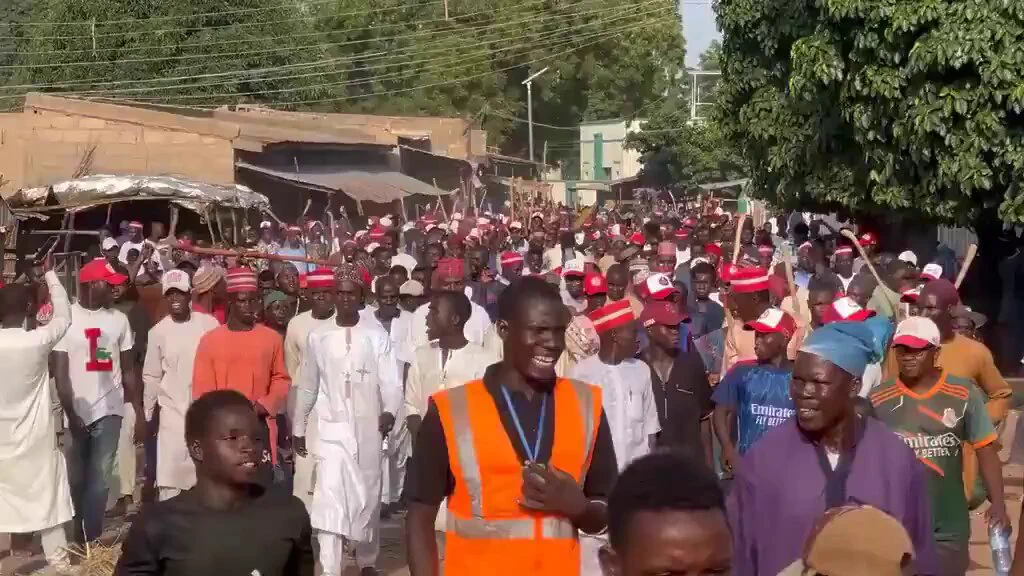
Ughelli North 10,000 man march for Peter Obi
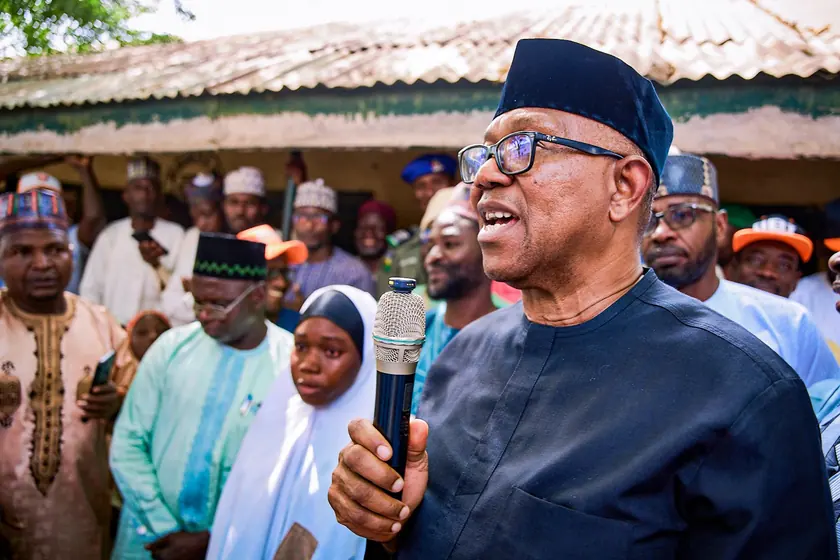
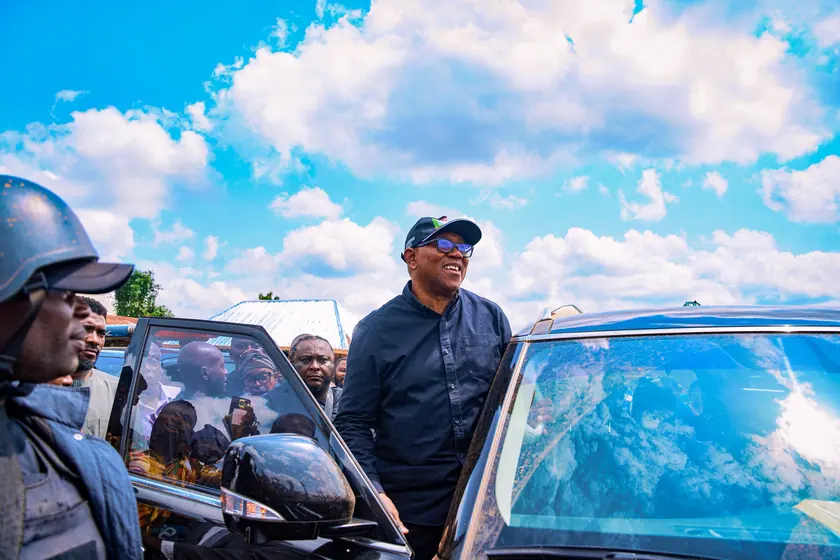
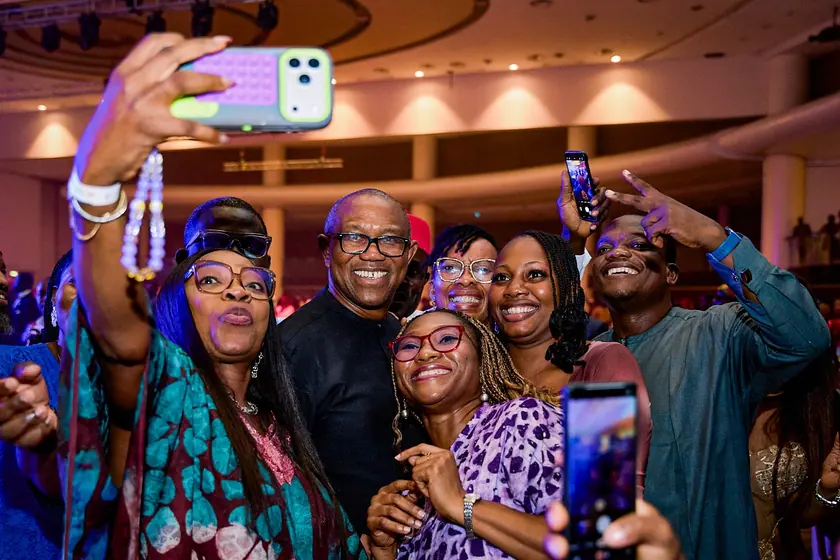
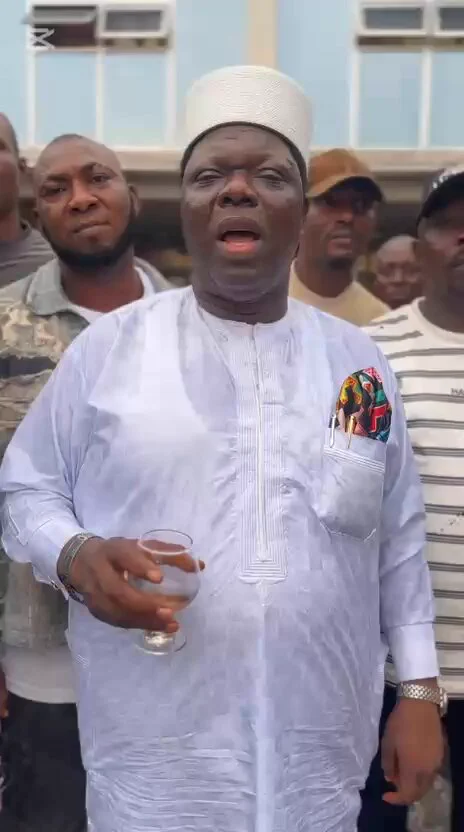
Ughelli North 10,000 man march for Peter Obi and NDC Candidates is set to hold tomorrow in Ughelli, Saturday Oct 3rd, 2026. Meeting point -Don Rose Event center, Ughelli Time 10am
Campaign updateDetails
2027 election cycle
Countdown to election day · 16 January 2027, 8:00 AM WAT
Executive Political Evidence Gallery
 Presidential Candidate — 2027
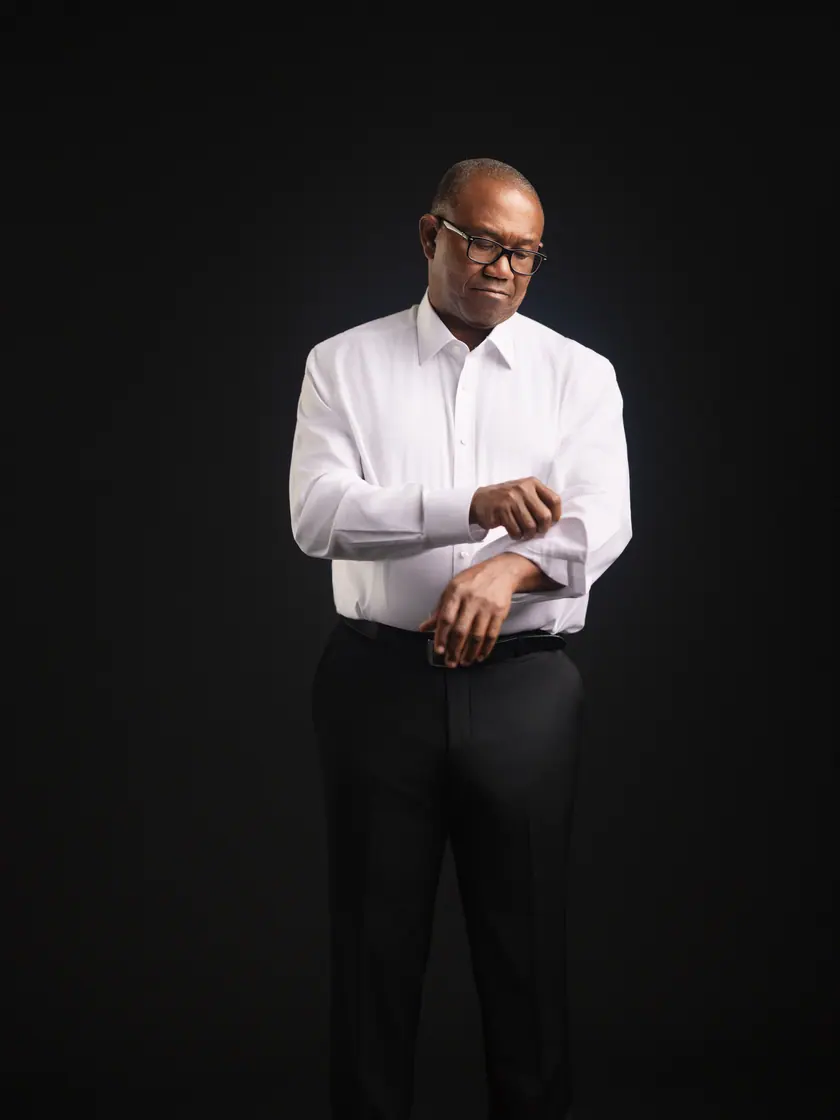
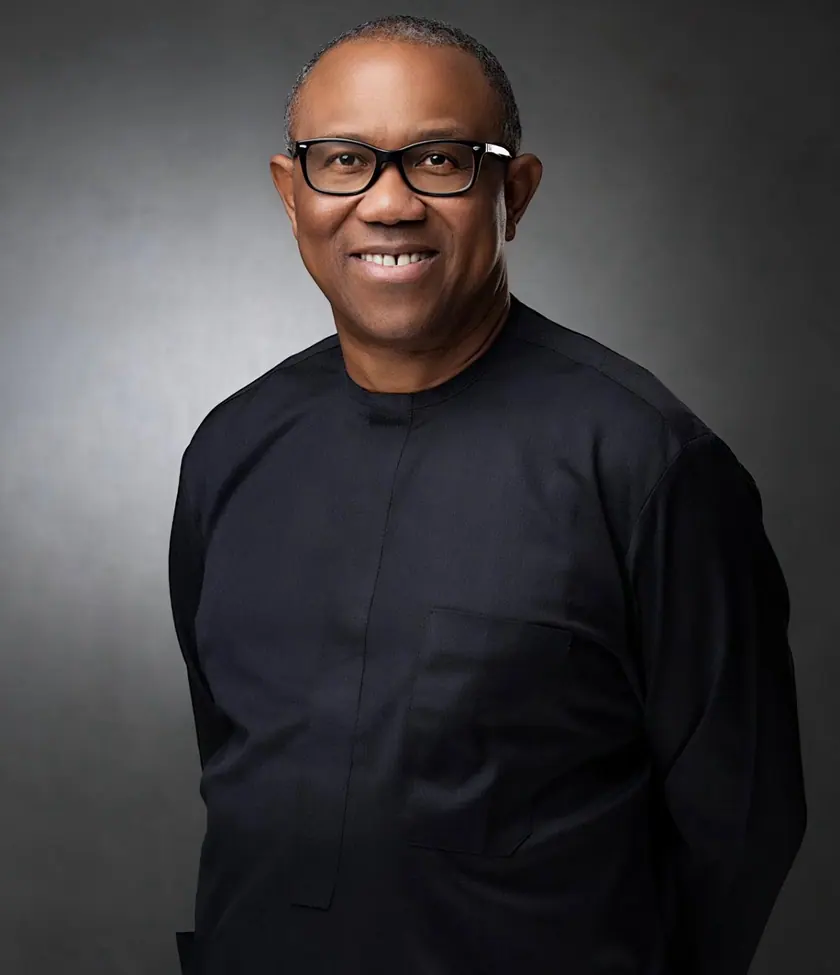
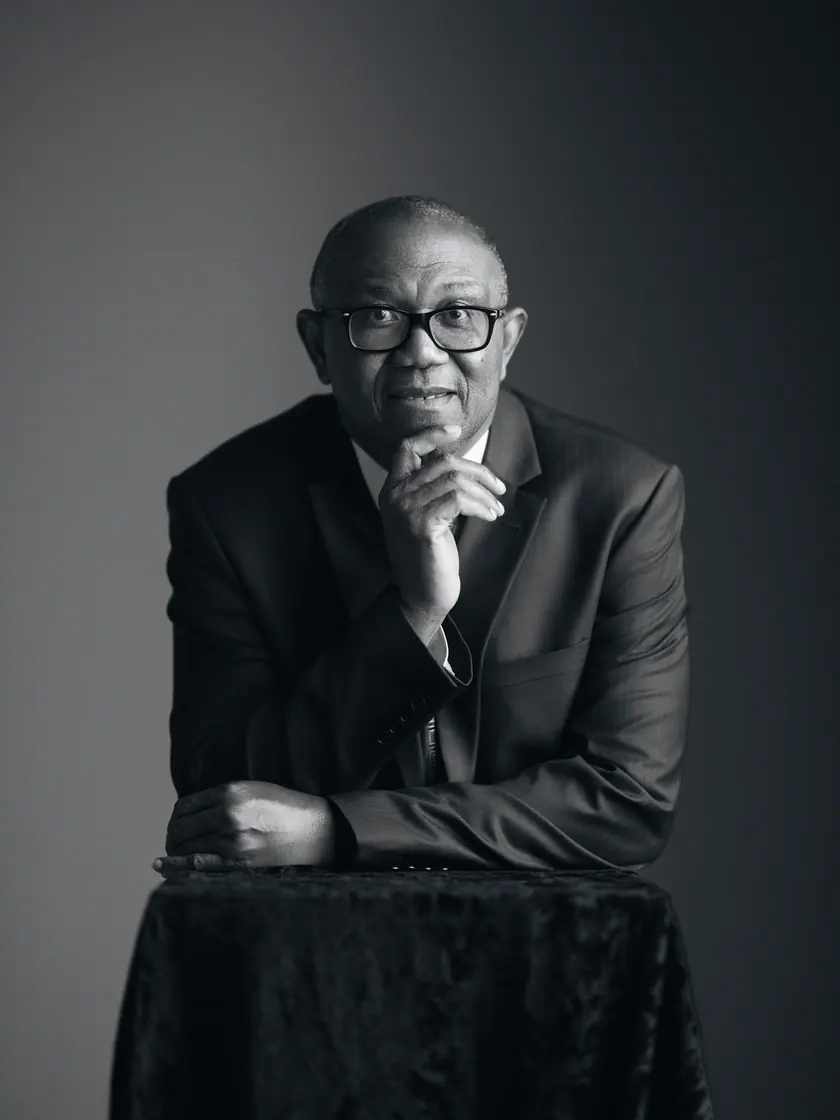
Nigerian businessman and politician, born in Onitsha in 1961. He served two terms as Governor of Anambra State (2006–2014) and placed third in the 2023 presidential election with over six million votes. He now leads the Nigeria Democratic Congress ticket for the 2027 election, running alongside Rabiu Kwankwaso.
01 / Archive
Browse evidence and approved campaign uploads in one responsive carousel. Campaign uploads remain stored and managed separately from the evidence archive.
Ughelli North 10,000 man march for Peter Obi and NDC Candidates is set to hold tomorrow in Ughelli, Saturday Oct 3rd, 2026. Meeting point -Don Rose Event center, Ughelli Time 10am
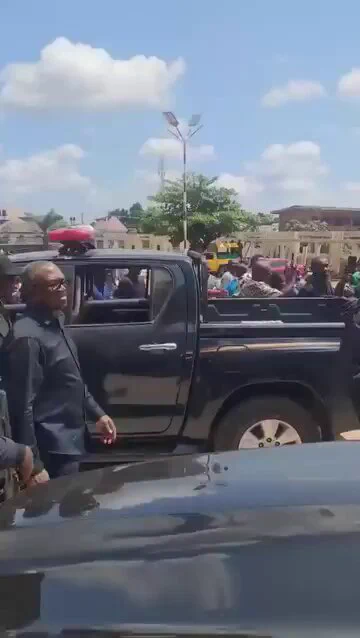
Days after David umahi said Peter obi is not popular in his state we set to give me a run for his words
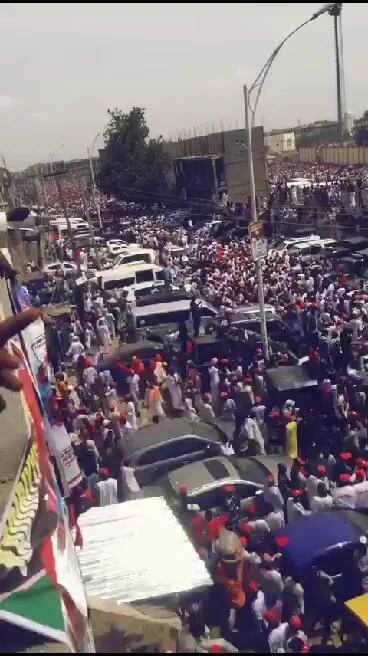
Apc in fear as we move
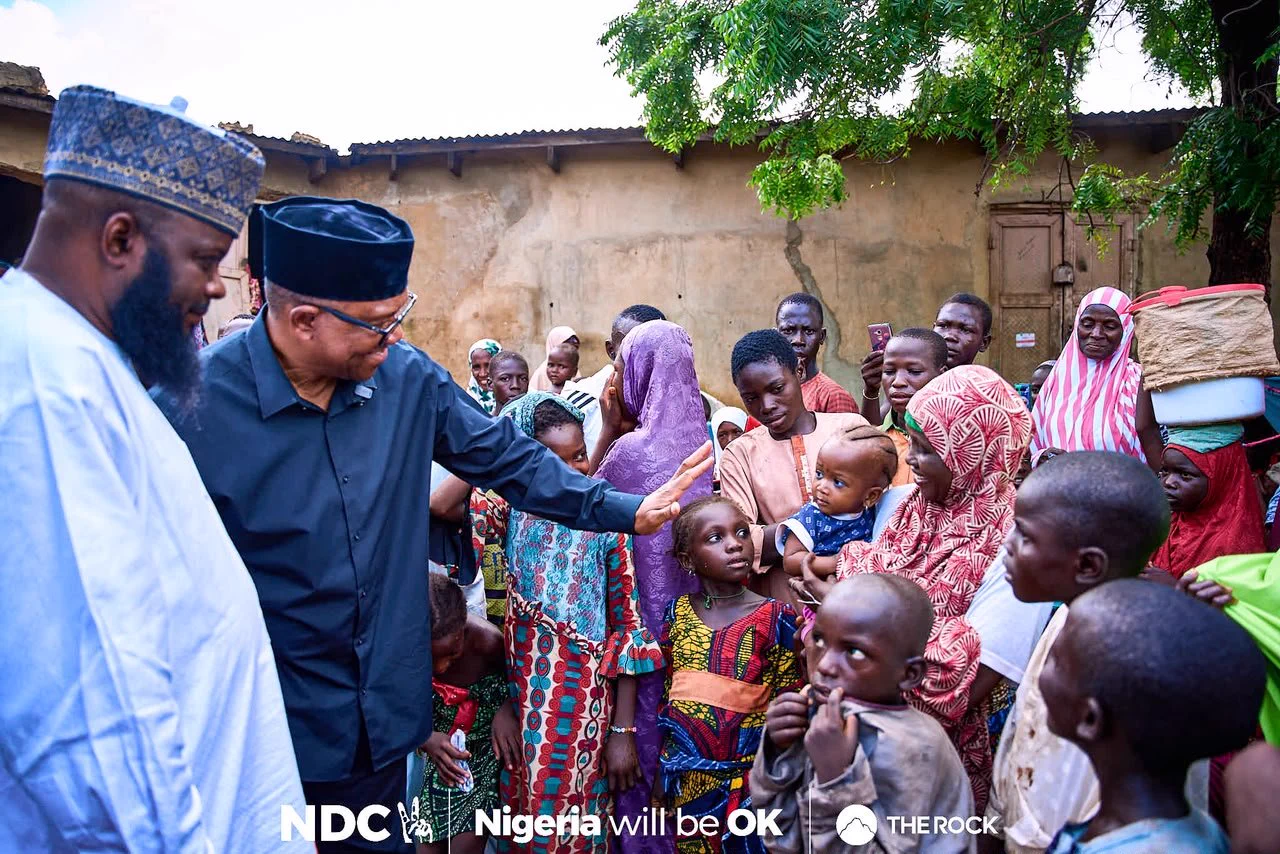
Peter obi said On 29th September 2026, in continuation of my two-day visit to Sokoto State, I had extensive consultations and discussions with various groups from across the state on insecurity, out-of-school children, endemic poverty, youth unemployment, drug prevalence, and other issues affecting our people in this part of the country. My final engagement was a visit to the Ramin Kura IDP Camp in Sokoto North LGA, within the Sokoto metropolis, which is currently housing over 1,000 internally displaced persons. During my tour of the facility, I found it particularly distressing to see Nigerians crammed into makeshift shelters and thatched rooms, with some rooms housing as many as 10 persons. The camp also lacks adequate toilet facilities, a primary healthcare centre, and even a basic school for the children. I have always insisted that as long as even one Nigerian lives in an IDP camp, we are all internally displaced. Therefore, the government of today must work assiduously to make the temporary accommodation for our dear citizens living in these camps comfortable, while ensuring that all the underlying security issues that created these conditions in the first place are resolved, to enable them to return to their ancestral homes. This is my 12th visit to IDP camps across Nigeria, and, just like in the others, I am committing to continuously supporting these Nigerians for as long as it takes. This is why I continue to say that the President’s and political office holders’ holidays must be within Nigeria, so that they can see first-hand the difficulties faced by these fellow Nigerians, whose vulnerability has been worsened by the failure of government to prioritise critical areas of development. Let me seize this opportunity to again call on the government and the relevant agencies to immediately look into the plight of these citizens and address their pressing needs. A New Nigeria is POssible and will be OK.
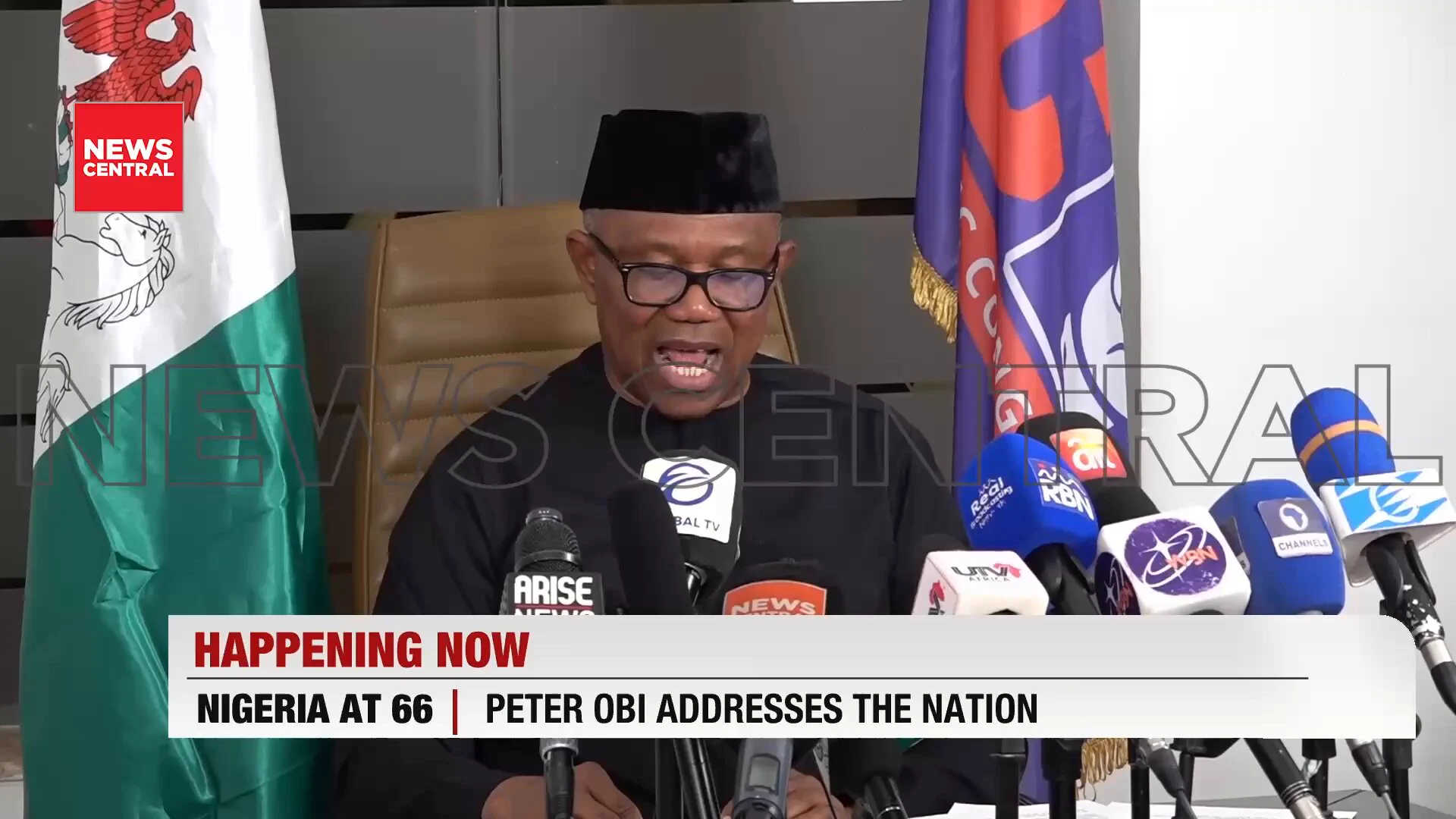
Today we mark the sixty-sixth anniversary of our independence. It ought to be a day of celebration and thanksgiving to God Almighty for the gift of life and for the immense blessings He has bestowed on our nation—our diversity, our abundant human and natural resources, our vast agricultural potential, and the relative absence of devastating natural disasters. It should also be a day of appreciation and patriotism: a day to remember our founding fathers and all those who made selfless, and in many cases supreme, sacrifices for the birth, survival and growth of our dear nation. We must acknowledge the efforts of past and present leaders who have laboured, however imperfectly, to build a better Nigeria. Yet independence anniversaries must never be reduced to mere celebration. They are moments for honest national reflection. We must look back, examine where we stand today, and ask ourselves whether we are moving in the direction our founding fathers envisioned. In national planning and strategy, every serious nation must continually ask three fundamental questions: Where are we today? Where do we want to be? How do we get from where we are to where we want to be? These questions are especially urgent now. Despite the enormous promises made by the APC-led government in 2023, our nation continues to face deepening challenges across virtually every critical sector of national life. Today we stand before the world as a nation: With an extraordinarily large population living in poverty and severe hardship; over 140M With one of the largest populations of out-of-school children in the world; over 18M Where insecurity, terrorism, banditry and kidnapping continue to threaten lives and livelihoods, just recently 37 young Nigerians in their productive age lost their lives Where millions of Nigerians struggle with hunger and food insecurity; over 40M Nigerians will be in extreme hunger by the end of 2026. With unacceptably high rates of infant and maternal mortality; Nigeria today is the worst place to be born. Where youth unemployment and underemployment remain alarmingly high; over 35M Where drug abuse and substance misuse increasingly threaten our young population; today 14% as against global average of 6% Where life expectancy remains among the lowest globally, today 54 years against global average of 74 years And the list goes on. This reality demands serious, sober and honest reflection. Socrates taught that “the unexamined life is not worth living.” By the same principle, an unexamined nation cannot successfully chart its future. We must therefore ask ourselves: Are we cursed, or have we become the curse through the choices we have made and the failures we have tolerated? The answer cannot be that Nigeria is cursed. We are a nation immensely endowed and blessed. Our greatest problem is not a lack of resources; it is the failure to convert our enormous resources into human development, productivity, security and shared prosperity. Only yesterday, Senator Rabiu Kwankwaso and I returned from a two-day visit to Sokoto State. We held extensive consultations with people from different parts of the state on insecurity, out-of-school children, poverty, youth unemployment, drug abuse and other challenges confronting our people. In concluding the visit, we went to the Internally Displaced Persons camp at Ramin Kura within Sokoto metropolis. What we saw was deeply troubling. Thousands of women and children live in deplorable conditions, displaced from their homes and deprived of the basic necessities of life. Many of the children have no access to education. Mothers and children have limited access to basic healthcare. These are Nigerians who should be living in their communities, going to school, farming their land, conducting their businesses and contributing to the economy. Instead, they live as displaced persons in their own country.
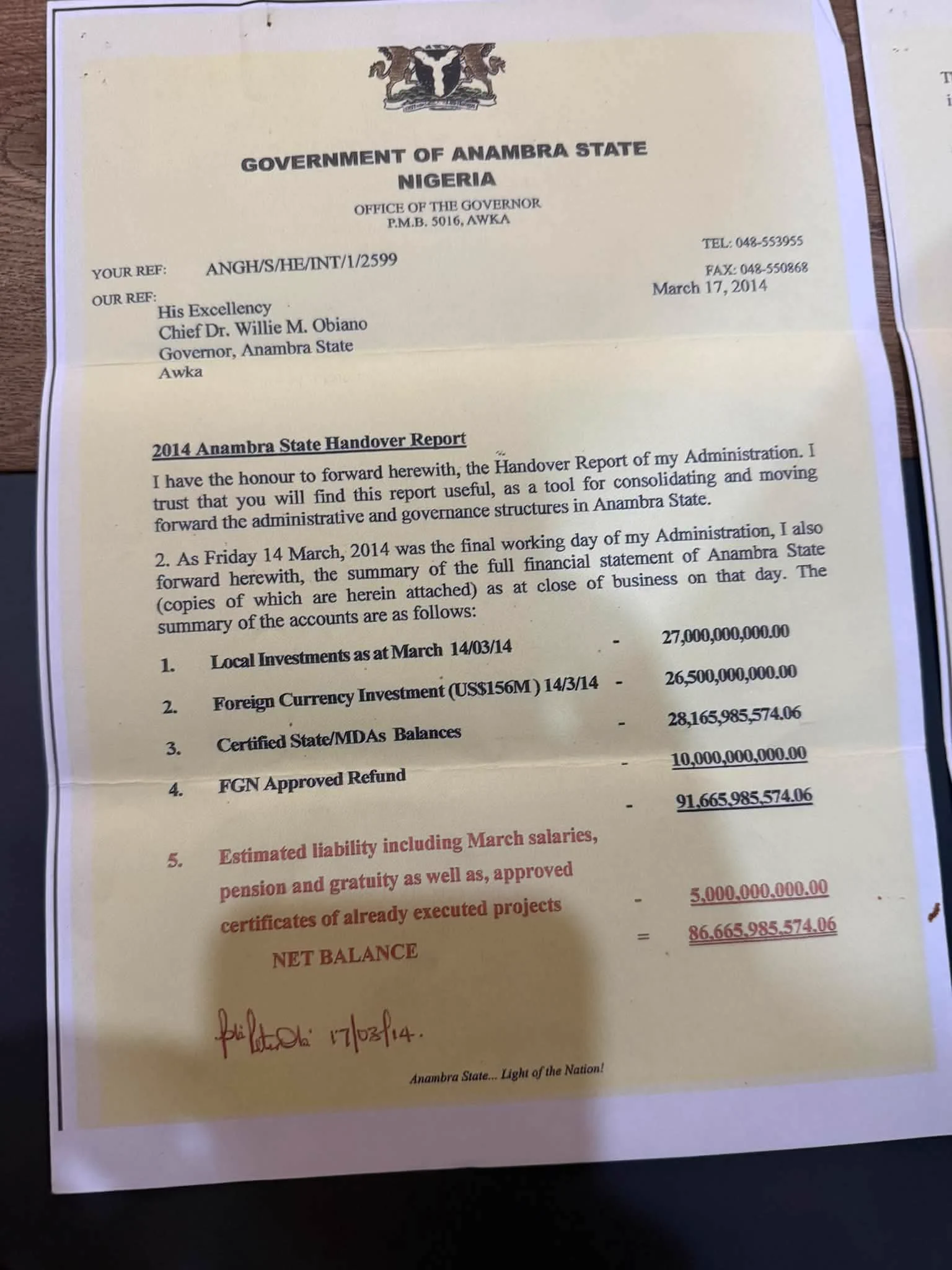
Former Anambra State Governor Peter Obi’s March 17, 2014 handover note, submitted to his successor Willie Obiano, outlines a total financial asset position of ₦91.67 billion and a net balance of ₦86.67 billion: Breakdown of Assets & Investments • Local Investments: ₦27.00 billion • Foreign Currency Investments: US$156 million (valued at approximately ₦26.50 billion) • Certified State and MDA Balances: ₦28.17 billion • Approved Federal Government Refund: ₦10.00 billion • Gross Total Assets: ₦91.67 billion Liabilities & Net Balance • Estimated Liabilities: ₦5.00 billion (covering March salaries, pensions, gratuities, and approved certificates for completed projects) • Net Balance: ₦86.67 billion (specifically recorded as ₦86,665,985,574.06)
movement
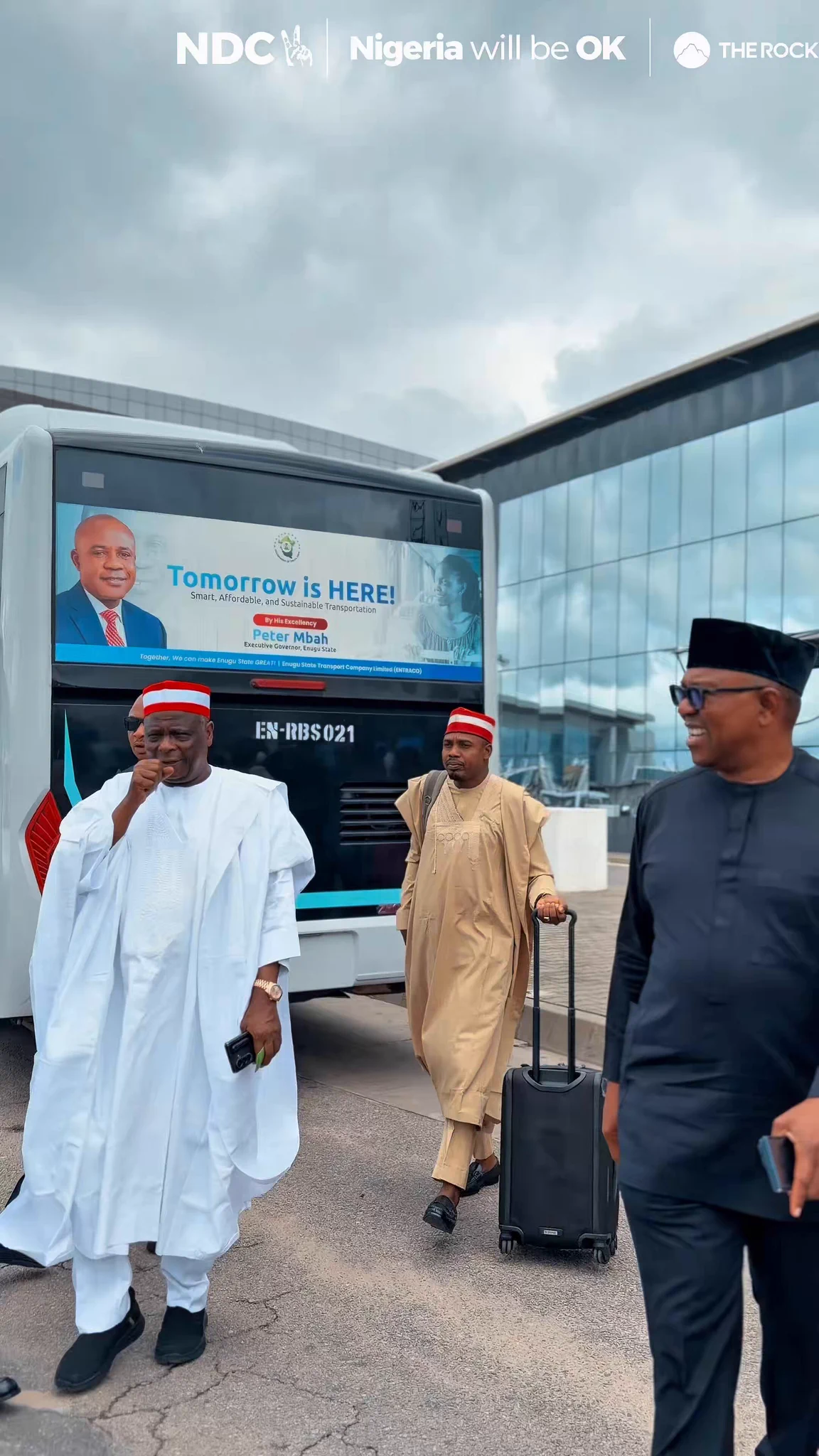
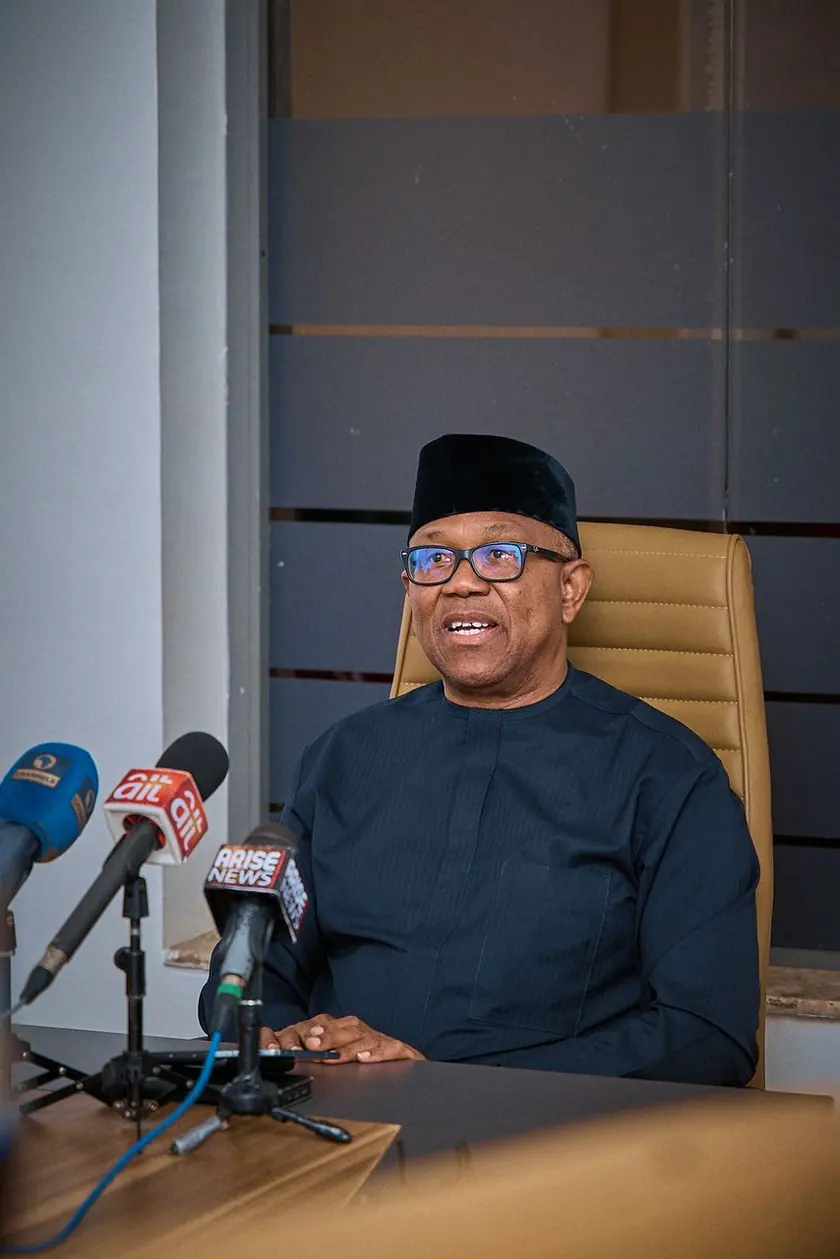
he NDC presidential candidate, Peter Obi alongside his Vice presidential candidate, Sen. Rabiu Kwankwaso this morning in Abuja.
Ughelli North 10,000 man march for Peter Obi and NDC Candidates is set to hold tomorrow in Ughelli, Saturday Oct 3rd, 2026. Meeting point -Don Rose Event center, Ughelli Time 10am
View campaign mediaDays after David umahi said Peter obi is not popular in his state we set to give me a run for his words
View campaign mediaApc in fear as we move
View campaign mediaPeter obi said On 29th September 2026, in continuation of my two-day visit to Sokoto State, I had extensive consultations and discussions with various groups from across the state on insecurity, out-of-school children, endemic poverty, youth unemployment, drug prevalence, and other issues affecting our people in this part of the country. My final engagement was a visit to the Ramin Kura IDP Camp in Sokoto North LGA, within the Sokoto metropolis, which is currently housing over 1,000 internally displaced persons. During my tour of the facility, I found it particularly distressing to see Nigerians crammed into makeshift shelters and thatched rooms, with some rooms housing as many as 10 persons. The camp also lacks adequate toilet facilities, a primary healthcare centre, and even a basic school for the children. I have always insisted that as long as even one Nigerian lives in an IDP camp, we are all internally displaced. Therefore, the government of today must work assiduously to make the temporary accommodation for our dear citizens living in these camps comfortable, while ensuring that all the underlying security issues that created these conditions in the first place are resolved, to enable them to return to their ancestral homes. This is my 12th visit to IDP camps across Nigeria, and, just like in the others, I am committing to continuously supporting these Nigerians for as long as it takes. This is why I continue to say that the President’s and political office holders’ holidays must be within Nigeria, so that they can see first-hand the difficulties faced by these fellow Nigerians, whose vulnerability has been worsened by the failure of government to prioritise critical areas of development. Let me seize this opportunity to again call on the government and the relevant agencies to immediately look into the plight of these citizens and address their pressing needs. A New Nigeria is POssible and will be OK.
View campaign mediaToday we mark the sixty-sixth anniversary of our independence. It ought to be a day of celebration and thanksgiving to God Almighty for the gift of life and for the immense blessings He has bestowed on our nation—our diversity, our abundant human and natural resources, our vast agricultural potential, and the relative absence of devastating natural disasters. It should also be a day of appreciation and patriotism: a day to remember our founding fathers and all those who made selfless, and in many cases supreme, sacrifices for the birth, survival and growth of our dear nation. We must acknowledge the efforts of past and present leaders who have laboured, however imperfectly, to build a better Nigeria. Yet independence anniversaries must never be reduced to mere celebration. They are moments for honest national reflection. We must look back, examine where we stand today, and ask ourselves whether we are moving in the direction our founding fathers envisioned. In national planning and strategy, every serious nation must continually ask three fundamental questions: Where are we today? Where do we want to be? How do we get from where we are to where we want to be? These questions are especially urgent now. Despite the enormous promises made by the APC-led government in 2023, our nation continues to face deepening challenges across virtually every critical sector of national life. Today we stand before the world as a nation: With an extraordinarily large population living in poverty and severe hardship; over 140M With one of the largest populations of out-of-school children in the world; over 18M Where insecurity, terrorism, banditry and kidnapping continue to threaten lives and livelihoods, just recently 37 young Nigerians in their productive age lost their lives Where millions of Nigerians struggle with hunger and food insecurity; over 40M Nigerians will be in extreme hunger by the end of 2026. With unacceptably high rates of infant and maternal mortality; Nigeria today is the worst place to be born. Where youth unemployment and underemployment remain alarmingly high; over 35M Where drug abuse and substance misuse increasingly threaten our young population; today 14% as against global average of 6% Where life expectancy remains among the lowest globally, today 54 years against global average of 74 years And the list goes on. This reality demands serious, sober and honest reflection. Socrates taught that “the unexamined life is not worth living.” By the same principle, an unexamined nation cannot successfully chart its future. We must therefore ask ourselves: Are we cursed, or have we become the curse through the choices we have made and the failures we have tolerated? The answer cannot be that Nigeria is cursed. We are a nation immensely endowed and blessed. Our greatest problem is not a lack of resources; it is the failure to convert our enormous resources into human development, productivity, security and shared prosperity. Only yesterday, Senator Rabiu Kwankwaso and I returned from a two-day visit to Sokoto State. We held extensive consultations with people from different parts of the state on insecurity, out-of-school children, poverty, youth unemployment, drug abuse and other challenges confronting our people. In concluding the visit, we went to the Internally Displaced Persons camp at Ramin Kura within Sokoto metropolis. What we saw was deeply troubling. Thousands of women and children live in deplorable conditions, displaced from their homes and deprived of the basic necessities of life. Many of the children have no access to education. Mothers and children have limited access to basic healthcare. These are Nigerians who should be living in their communities, going to school, farming their land, conducting their businesses and contributing to the economy. Instead, they live as displaced persons in their own country.
View campaign mediaFormer Anambra State Governor Peter Obi’s March 17, 2014 handover note, submitted to his successor Willie Obiano, outlines a total financial asset position of ₦91.67 billion and a net balance of ₦86.67 billion: Breakdown of Assets & Investments • Local Investments: ₦27.00 billion • Foreign Currency Investments: US$156 million (valued at approximately ₦26.50 billion) • Certified State and MDA Balances: ₦28.17 billion • Approved Federal Government Refund: ₦10.00 billion • Gross Total Assets: ₦91.67 billion Liabilities & Net Balance • Estimated Liabilities: ₦5.00 billion (covering March salaries, pensions, gratuities, and approved certificates for completed projects) • Net Balance: ₦86.67 billion (specifically recorded as ₦86,665,985,574.06)
View evidencemovement
View campaign mediahe NDC presidential candidate, Peter Obi alongside his Vice presidential candidate, Sen. Rabiu Kwankwaso this morning in Abuja.
View campaign media02 / Giving
A separate ledger for financial and in-kind contributions, with source provenance and verification status.
In kind · Health
Lagos, Nigeria
₦10m · Health
Nsukka, Enugu State
₦10m · Education
Nsukka, Enugu State
03 / What's New
Campaign photos and videos submitted by the community and published only after moderator approval.
Ughelli North 10,000 man march for Peter Obi and NDC Candidates is set to hold tomorrow in Ughelli, Saturday Oct 3rd, 2026. Meeting point -Don Rose Event center, Ughelli Time 10am
Today we mark the sixty-sixth anniversary of our independence. It ought to be a day of celebration and thanksgiving to God Almighty for the gift of life and for the immense blessings He has bestowed on our nation—our diversity, our abundant human and natural resources, our vast agricultural potential, and the relative absence of devastating natural disasters. It should also be a day of appreciation and patriotism: a day to remember our founding fathers and all those who made selfless, and in many cases supreme, sacrifices for the birth, survival and growth of our dear nation. We must acknowledge the efforts of past and present leaders who have laboured, however imperfectly, to build a better Nigeria. Yet independence anniversaries must never be reduced to mere celebration. They are moments for honest national reflection. We must look back, examine where we stand today, and ask ourselves whether we are moving in the direction our founding fathers envisioned. In national planning and strategy, every serious nation must continually ask three fundamental questions: Where are we today? Where do we want to be? How do we get from where we are to where we want to be? These questions are especially urgent now. Despite the enormous promises made by the APC-led government in 2023, our nation continues to face deepening challenges across virtually every critical sector of national life. Today we stand before the world as a nation: With an extraordinarily large population living in poverty and severe hardship; over 140M With one of the largest populations of out-of-school children in the world; over 18M Where insecurity, terrorism, banditry and kidnapping continue to threaten lives and livelihoods, just recently 37 young Nigerians in their productive age lost their lives Where millions of Nigerians struggle with hunger and food insecurity; over 40M Nigerians will be in extreme hunger by the end of 2026. With unacceptably high rates of infant and maternal mortality; Nigeria today is the worst place to be born. Where youth unemployment and underemployment remain alarmingly high; over 35M Where drug abuse and substance misuse increasingly threaten our young population; today 14% as against global average of 6% Where life expectancy remains among the lowest globally, today 54 years against global average of 74 years And the list goes on. This reality demands serious, sober and honest reflection. Socrates taught that “the unexamined life is not worth living.” By the same principle, an unexamined nation cannot successfully chart its future. We must therefore ask ourselves: Are we cursed, or have we become the curse through the choices we have made and the failures we have tolerated? The answer cannot be that Nigeria is cursed. We are a nation immensely endowed and blessed. Our greatest problem is not a lack of resources; it is the failure to convert our enormous resources into human development, productivity, security and shared prosperity. Only yesterday, Senator Rabiu Kwankwaso and I returned from a two-day visit to Sokoto State. We held extensive consultations with people from different parts of the state on insecurity, out-of-school children, poverty, youth unemployment, drug abuse and other challenges confronting our people. In concluding the visit, we went to the Internally Displaced Persons camp at Ramin Kura within Sokoto metropolis. What we saw was deeply troubling. Thousands of women and children live in deplorable conditions, displaced from their homes and deprived of the basic necessities of life. Many of the children have no access to education. Mothers and children have limited access to basic healthcare. These are Nigerians who should be living in their communities, going to school, farming their land, conducting their businesses and contributing to the economy. Instead, they live as displaced persons in their own country.
Peter obi said On 29th September 2026, in continuation of my two-day visit to Sokoto State, I had extensive consultations and discussions with various groups from across the state on insecurity, out-of-school children, endemic poverty, youth unemployment, drug prevalence, and other issues affecting our people in this part of the country. My final engagement was a visit to the Ramin Kura IDP Camp in Sokoto North LGA, within the Sokoto metropolis, which is currently housing over 1,000 internally displaced persons. During my tour of the facility, I found it particularly distressing to see Nigerians crammed into makeshift shelters and thatched rooms, with some rooms housing as many as 10 persons. The camp also lacks adequate toilet facilities, a primary healthcare centre, and even a basic school for the children. I have always insisted that as long as even one Nigerian lives in an IDP camp, we are all internally displaced. Therefore, the government of today must work assiduously to make the temporary accommodation for our dear citizens living in these camps comfortable, while ensuring that all the underlying security issues that created these conditions in the first place are resolved, to enable them to return to their ancestral homes. This is my 12th visit to IDP camps across Nigeria, and, just like in the others, I am committing to continuously supporting these Nigerians for as long as it takes. This is why I continue to say that the President’s and political office holders’ holidays must be within Nigeria, so that they can see first-hand the difficulties faced by these fellow Nigerians, whose vulnerability has been worsened by the failure of government to prioritise critical areas of development. Let me seize this opportunity to again call on the government and the relevant agencies to immediately look into the plight of these citizens and address their pressing needs. A New Nigeria is POssible and will be OK.
he NDC presidential candidate, Peter Obi alongside his Vice presidential candidate, Sen. Rabiu Kwankwaso this morning in Abuja.
Days after David umahi said Peter obi is not popular in his state we set to give me a run for his words
Ughelli North 10,000 man march for Peter Obi and NDC Candidates is set to hold tomorrow in Ughelli, Saturday Oct 3rd, 2026. Meeting point -Don Rose Event center, Ughelli Time 10am
DetailsToday we mark the sixty-sixth anniversary of our independence. It ought to be a day of celebration and thanksgiving to God Almighty for the gift of life and for the immense blessings He has bestowed on our nation—our diversity, our abundant human and natural resources, our vast agricultural potential, and the relative absence of devastating natural disasters. It should also be a day of appreciation and patriotism: a day to remember our founding fathers and all those who made selfless, and in many cases supreme, sacrifices for the birth, survival and growth of our dear nation. We must acknowledge the efforts of past and present leaders who have laboured, however imperfectly, to build a better Nigeria. Yet independence anniversaries must never be reduced to mere celebration. They are moments for honest national reflection. We must look back, examine where we stand today, and ask ourselves whether we are moving in the direction our founding fathers envisioned. In national planning and strategy, every serious nation must continually ask three fundamental questions: Where are we today? Where do we want to be? How do we get from where we are to where we want to be? These questions are especially urgent now. Despite the enormous promises made by the APC-led government in 2023, our nation continues to face deepening challenges across virtually every critical sector of national life. Today we stand before the world as a nation: With an extraordinarily large population living in poverty and severe hardship; over 140M With one of the largest populations of out-of-school children in the world; over 18M Where insecurity, terrorism, banditry and kidnapping continue to threaten lives and livelihoods, just recently 37 young Nigerians in their productive age lost their lives Where millions of Nigerians struggle with hunger and food insecurity; over 40M Nigerians will be in extreme hunger by the end of 2026. With unacceptably high rates of infant and maternal mortality; Nigeria today is the worst place to be born. Where youth unemployment and underemployment remain alarmingly high; over 35M Where drug abuse and substance misuse increasingly threaten our young population; today 14% as against global average of 6% Where life expectancy remains among the lowest globally, today 54 years against global average of 74 years And the list goes on. This reality demands serious, sober and honest reflection. Socrates taught that “the unexamined life is not worth living.” By the same principle, an unexamined nation cannot successfully chart its future. We must therefore ask ourselves: Are we cursed, or have we become the curse through the choices we have made and the failures we have tolerated? The answer cannot be that Nigeria is cursed. We are a nation immensely endowed and blessed. Our greatest problem is not a lack of resources; it is the failure to convert our enormous resources into human development, productivity, security and shared prosperity. Only yesterday, Senator Rabiu Kwankwaso and I returned from a two-day visit to Sokoto State. We held extensive consultations with people from different parts of the state on insecurity, out-of-school children, poverty, youth unemployment, drug abuse and other challenges confronting our people. In concluding the visit, we went to the Internally Displaced Persons camp at Ramin Kura within Sokoto metropolis. What we saw was deeply troubling. Thousands of women and children live in deplorable conditions, displaced from their homes and deprived of the basic necessities of life. Many of the children have no access to education. Mothers and children have limited access to basic healthcare. These are Nigerians who should be living in their communities, going to school, farming their land, conducting their businesses and contributing to the economy. Instead, they live as displaced persons in their own country.
DetailsPeter obi said On 29th September 2026, in continuation of my two-day visit to Sokoto State, I had extensive consultations and discussions with various groups from across the state on insecurity, out-of-school children, endemic poverty, youth unemployment, drug prevalence, and other issues affecting our people in this part of the country. My final engagement was a visit to the Ramin Kura IDP Camp in Sokoto North LGA, within the Sokoto metropolis, which is currently housing over 1,000 internally displaced persons. During my tour of the facility, I found it particularly distressing to see Nigerians crammed into makeshift shelters and thatched rooms, with some rooms housing as many as 10 persons. The camp also lacks adequate toilet facilities, a primary healthcare centre, and even a basic school for the children. I have always insisted that as long as even one Nigerian lives in an IDP camp, we are all internally displaced. Therefore, the government of today must work assiduously to make the temporary accommodation for our dear citizens living in these camps comfortable, while ensuring that all the underlying security issues that created these conditions in the first place are resolved, to enable them to return to their ancestral homes. This is my 12th visit to IDP camps across Nigeria, and, just like in the others, I am committing to continuously supporting these Nigerians for as long as it takes. This is why I continue to say that the President’s and political office holders’ holidays must be within Nigeria, so that they can see first-hand the difficulties faced by these fellow Nigerians, whose vulnerability has been worsened by the failure of government to prioritise critical areas of development. Let me seize this opportunity to again call on the government and the relevant agencies to immediately look into the plight of these citizens and address their pressing needs. A New Nigeria is POssible and will be OK.
Detailshe NDC presidential candidate, Peter Obi alongside his Vice presidential candidate, Sen. Rabiu Kwankwaso this morning in Abuja.
DetailsDays after David umahi said Peter obi is not popular in his state we set to give me a run for his words
DetailsAuto-advances every 5.2 seconds. Videos play muted when their card is sufficiently visible and pause when it leaves the viewport.
Only approved campaign updates appear here. Linked videos use the same muted, inline autoplay behavior when supported by the source provider.
Submit campaign media04 / Context
1961
Peter Gregory Obi is born in Onitsha, Anambra State, into a trading family.
Source: peterobi.online2006–2014
Serves two terms as governor over eight years (17 March 2006 – 17 March 2014), a tenure that survives an impeachment attempt and includes regaining his mandate through a Supreme Court ruling.
Source: peterobi.online2009–2011
Eighteen secondary schools are handed back to the Catholic and Anglican churches in January 2009, followed by 1,040 primary schools in November 2011, with roughly ₦6bn in state grants paid over the following fifteen months. The state continues paying teacher salaries while the missions run the schools.
Source: Vanguard05 / Contribute
Submit documents, images, videos or audio for review. Every submission enters a moderation workflow before publication.
Submit evidence